
Tag - fea

23
Jun

Use of FEA in Elevator Design and Test

Schindler Elevator’s offerings range from passenger elevators suitable for small blocks of apartments to sophisticated transport solutions for skyscrapers. Service elevators ensure the stress-free movement of goods and people in shopping centers, office buildings and railway stations. Bed elevators provide for the smooth and vibration-free movement of patients and equipment in hospitals. In industrial buildings, many of the hoists and small good elevators in use are supplied by Schindler, while glass cabin elevators in tall buildings offer both a novel experience and a feeling of safety. It is hard to imagine public transport without elevators, which are often heavily used and must therefore meet demanding requirements in availability and serviceability.

The company’s research and development facility in Switzerland devises complete elevator systems as well as components for all applications. Here, CAE is used to find reliable and energy-efficient solutions which make the most efficient use of materials. The programs SimXpert and MSC Nastran from MSC Software are used for structural calculations using the finite element method (FE). These are used, for example, to simulate the wall fixings of elevators and determine whether deformations and loadings remain within the permissible range. The resulting design and its verification encompass the guiding system and the cabin, counterweight and drive components. In addition to static (strength) calculations, dynamic and vibration analyses are also carried out with the aid of FE methods. The field of nonlinear FE calculations is also of central significance.
22
Jun

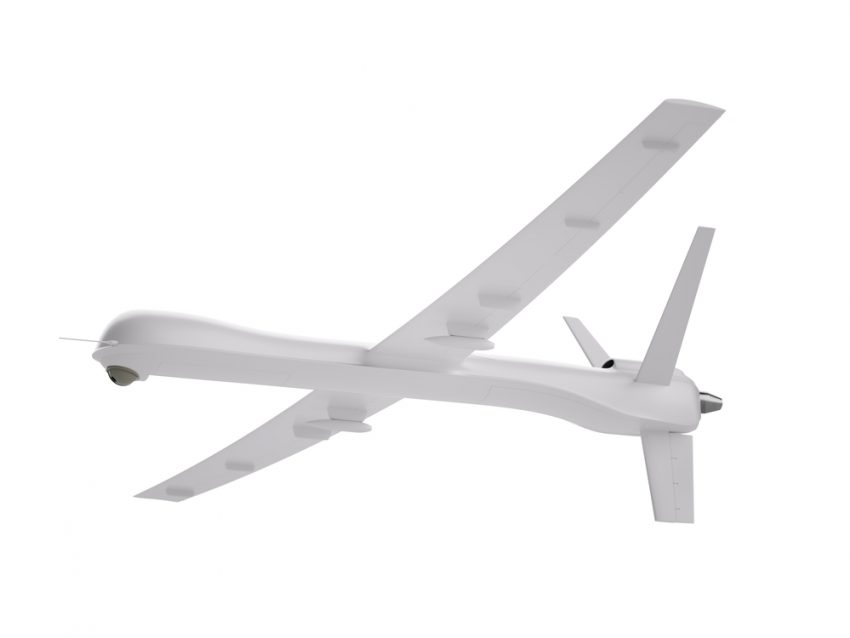
Finite Element Analysis of a UAV Wing

AeroVironment’s Global Observer is an unmanned aircraft with the wingspan of a Boeing 767 but less than 10% of the weight designed to provide communications and sensing for flights lasting up to one week at up to 65,000 feet. With a maximum wing loading of only 3.5 pounds per square feet, the wingtip deflects greater than 22 feet at its design limit load.

MSC Nastran was utilized to develop nonlinear stress, structural dynamic and aeroelastic finite element models. The structural dynamics model was correlated to a ground vibration test, both of which had to accommodate the apparent mass of the air, which is atypical. The ultimate test of the nonlinear stress model was correlation with the static wing load test.

20
Apr

Understanding Automotive Engine Noise

One of the most significant pressures on car manufacturers today is sound quality. There are many factors that engineers must consider when analyzing the sound emitted by a car. Aside from being a marketing tool, there are now government regulations on sound. New developing technologies including hands-free mobile and speech recognition require the clear voice …

17
Apr

Aeros Develops Revolutionary Vehicle Buoyancy Air Vehicle with MSC Nastran

Aeros Develops Revolutionary Vehicle Buoyancy Air Vehicle with MSC Nastran.   The Aeroscraft is a unique variable buoyancy air vehicle developed by Worldwide Aeros Corp. that combines elements of lighter-than-air crafts such as airships with conventional heavier-than-air aircrafts. The unique design of the Aeroscraft requires high weight efficiency (low ratio of weight over hull surface …